
Curriculum
Overview
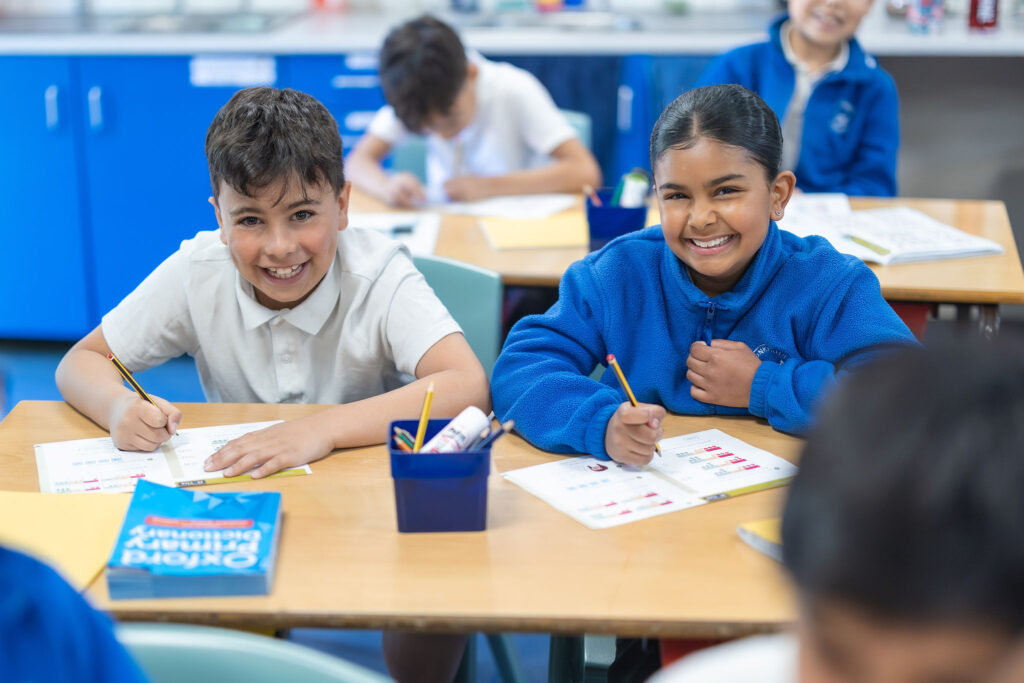
We provide a broad and balanced curriculum, built around the National Curriculum, to inspire curiosity and a lifelong love of learning. Wherever possible, learning is structured around themes that help children make meaningful connections between concepts, deepening their understanding over time. We place a strong emphasis on developing both subject-specific and transferable vocabulary, enabling children to confidently express their knowledge and ideas. While many subjects are integrated into thematic learning, others, such as RE, Spanish, and PE, are taught discretely to ensure depth and progression.
English
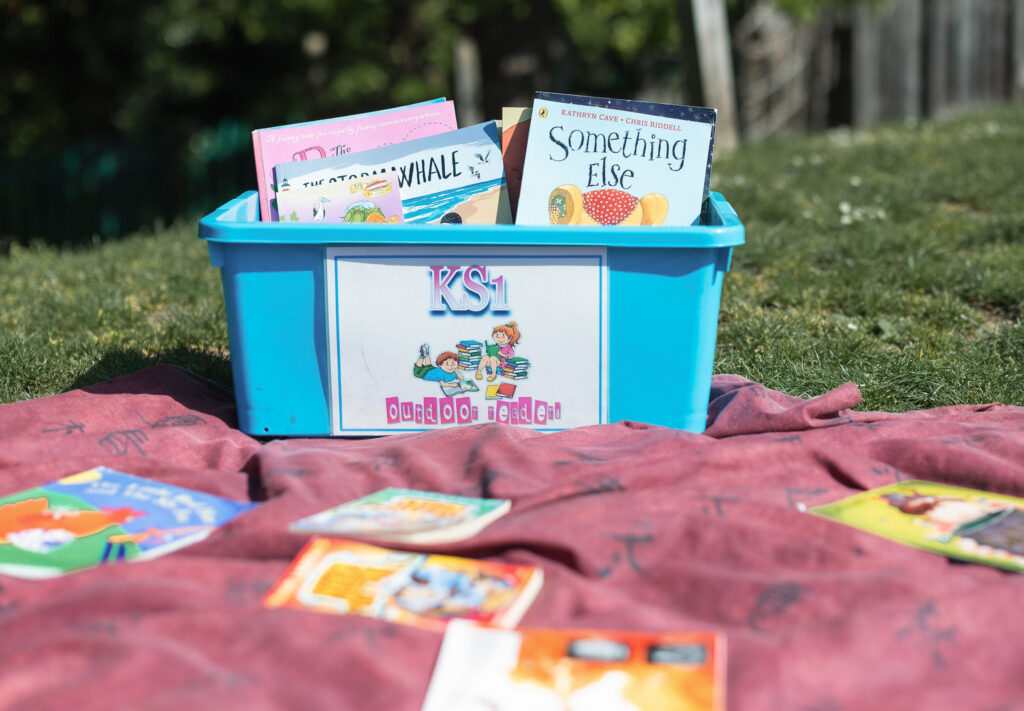
At Monkfrith, we aim to ensure that our children become fluent, confident, and articulate in both their spoken and written communication. We want them to develop a love for reading, understanding its importance both for enjoyment and for deepening knowledge across all areas of the curriculum.
Language plays a crucial role in the development of children’s thinking, communication, and creativity. Through language, children are able to formulate and express their ideas, organise their thoughts, and make sense of the world. Central to our teaching approach is the use of high-quality core texts, both fiction and nonfiction, which serve as models for their own writing and speaking.
Reading
Teaching children to read as soon as they are ready is a priority, as this unlocks the rest of the curriculum. In Reception and Key Stage 1, we focus on high-quality phonics instruction, alongside guided reading and one-to-one reading sessions, to build children’s fluency, prosody, and comprehension. In Key Stage 2, we teach reading through whole-class lessons, ensuring all children engage with and enjoy challenging, exciting, and thought-provoking texts.
In addition to specific reading lessons, all children are read to by an adult each day as part of dedicated storytime. This encourages a love of books and provides further opportunities for children to explore and engage with texts independently.
Writing
Fundamental to our approach to writing is exposing children to high-quality texts and providing rich speaking and listening opportunities. We believe that children write better when they have the chance to articulate their thoughts, ideas, and opinions orally. We offer meaningful writing tasks to develop their skills in writing to entertain, inform, persuade, and argue.
We also explicitly teach editing in age-appropriate ways to encourage children to reflect on and improve their writing, developing their independence as writers. Grammar is integrated into our lessons, giving children the confidence to apply their knowledge to their own work.
Spelling is taught weekly, with a focus on specific patterns and rules. Handwriting is introduced early and taught progressively across the school. By the end of Year 2, we expect the majority of children to have developed clear, legible, and consistently joined handwriting.
Early Reading and Phonics
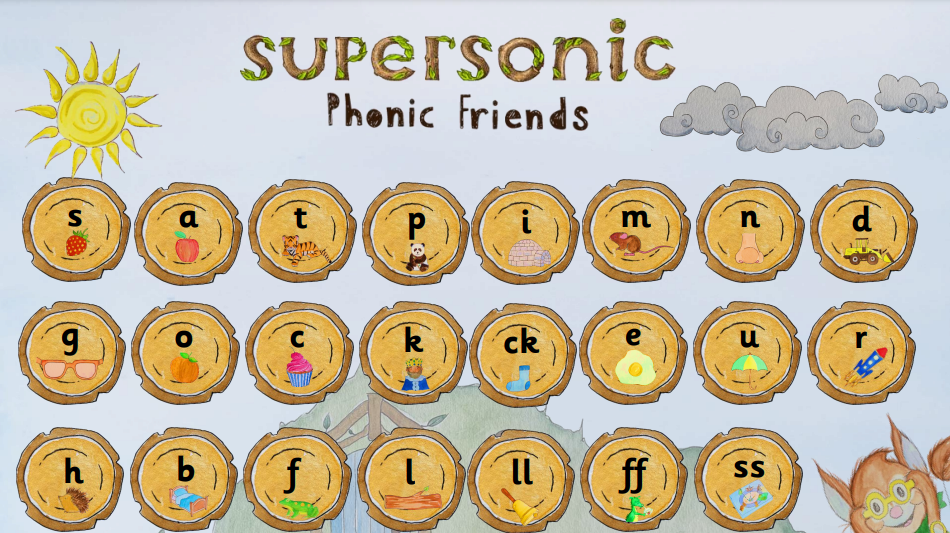
We use Super Sonic Phonic Friends to support us with the teaching of systematic synthetic phonics. This ensures a consistent approach across Early Years and Key Stage 1. Our approach aims to build children’s speaking and listening skills as well as preparing them to learn to read by developing their phonic knowledge and skills.
The Phonics Scheme is designed for children from Reception to Year 2 and for some children in KS2 who would benefit from extra support. It is an adventure of phonics where the children will meet a team of woodland characters who represent each skill involved.
Sessions are taught daily for 30 minutes and have a clear structure following the model: Revisit & Revise, Teach, Practice and Apply.
Maths
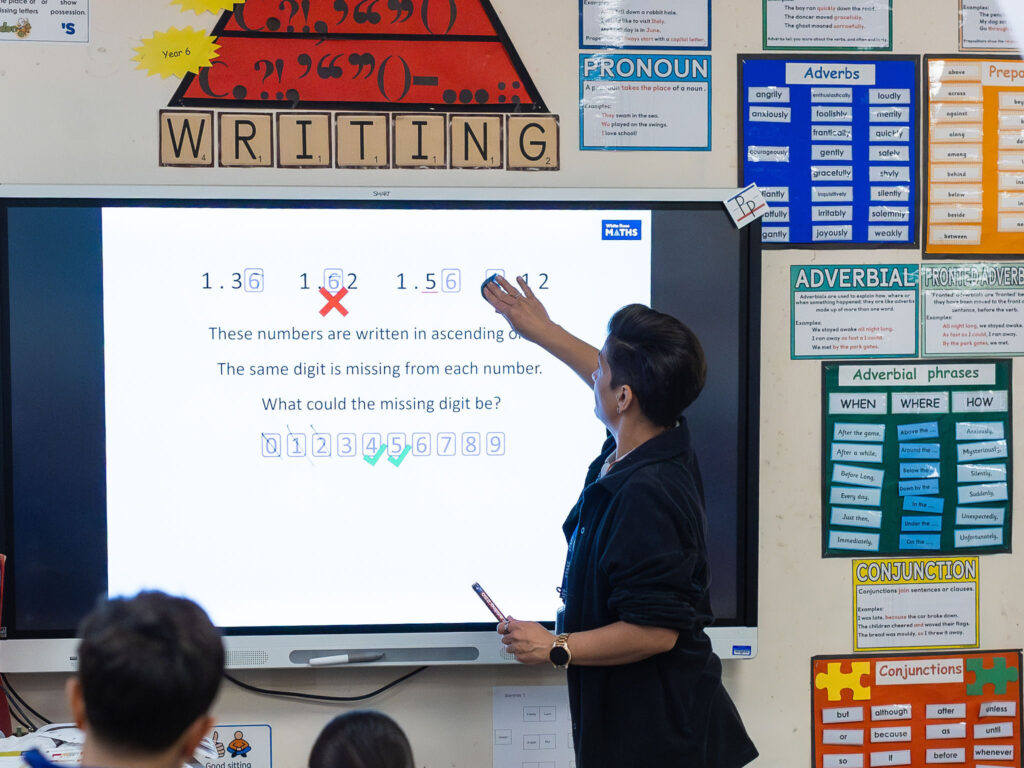
At Monkfrith, we want our mathematicians to be confident and resilient. The National Curriculum expects that nearly all children reach the expectations for their year group. Children who grasp concepts rapidly should be challenged through being offered rich and sophisticated problems before any acceleration through new content. Those who are not sufficiently fluent with earlier material should consolidate their understanding, including, through additional practice, before moving on.
The National Curriculum for mathematics aims to ensure that all children:
- Become fluent in the fundamentals of mathematics, including through varied and frequent practice with increasingly complex problems over time, so that children have conceptual understanding and are able to recall and apply their knowledge rapidly and accurately
- Reason mathematically by following a line of enquiry, conjecturing relationships and generalisations, and developing an argument, justification or proof using mathematical language
- Can solve problems by applying their mathematics to a variety of routine and non-routine problems with increasing sophistication, including breaking down problems into a series of simpler steps and persevering in seeking solutions.
In order to achieve this the teachers from Reception to year 6 are using detailed Schemes of Learning published by the White Rose Maths to plan effective maths lessons. These lessons are designed to give the children solid foundations in all areas of the maths curriculum as well as giving them the chance to reason and problem solving using their skills.
Science
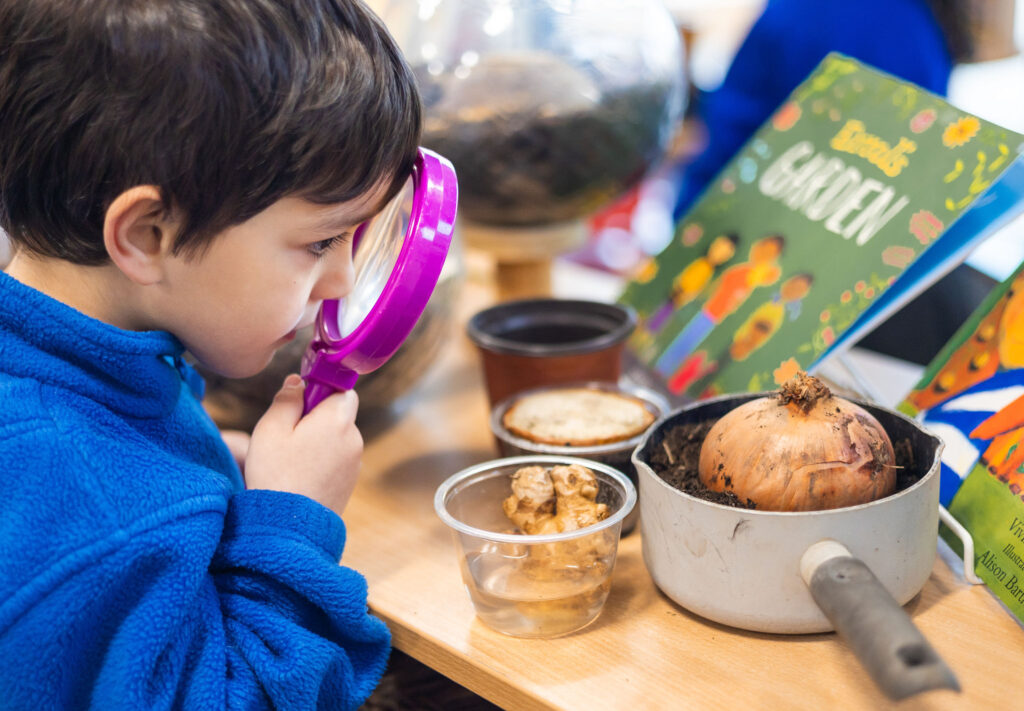
At Monkfrith, our Science teaching follows the National Curriculum objectives, ensuring that all children develop a strong understanding of core scientific concepts. We provide engaging, hands-on learning experiences that build a solid foundation in scientific inquiry and investigative work, in line with the key strands of the curriculum: biology, chemistry, physics, and earth sciences.
Through practical activities and experiments, children are encouraged to develop their questioning skills and engage in scientific enquiry, enabling them to make predictions, observe results, and draw conclusions. We focus on the development of scientific vocabulary, helping children to communicate their understanding clearly and confidently. This approach not only enhances their scientific knowledge but also supports their ability to explain concepts in both written and verbal formats.
Key components of our Science curriculum include:
- Developing an understanding of scientific concepts such as forces, electricity, the human body, materials, and the environment.
- Exploring scientific methods and the processes of investigation, including observation, measurement, and experimentation.
- Promoting critical thinking by encouraging children to ask questions, design experiments, and evaluate evidence.
As children progress through the school, their knowledge deepens, and they are given opportunities to explore more complex scientific topics. By the end of each key stage, our aim is for children to have a strong grasp of the scientific principles in each discipline and be able to apply their knowledge to real-world contexts.
Humanities
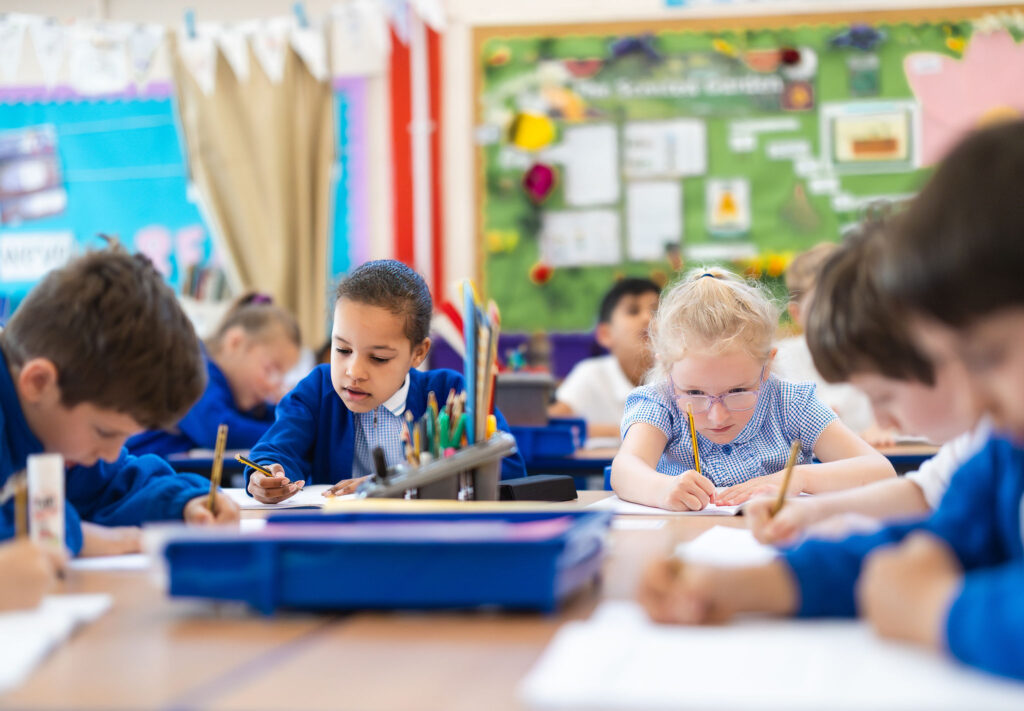
At Monkfrith, we teach history and geography through a thematic approach, helping children make meaningful connections between their learning, language development, and understanding of the wider world.
Our geography curriculum inspires curiosity and fascination about the world and its people. It develops children’s knowledge of diverse places, cultures, resources, and both natural and human environments. The curriculum is carefully sequenced, beginning with an exploration of our school and local area in Reception and progressing to topics such as climate change and resource distribution in KS2.
We will teach:
- Locational and place knowledge
- Understanding of human and physical features
- Geographical skills and fieldwork
- Geographical enquiry skills
- Understanding of sustainability
Our history curriculum fosters curiosity and a deeper understanding of Britain’s past and the wider world, helping children appreciate how history has shaped the present. They will develop a sense of chronology, recognising how societies and events are interconnected over time.
We will teach:
- An understanding of chronology and how societies change over time
- Historical enquiry skills, including evaluating evidence and sources
- Significant periods in British history and key civilisations from around the world
PE
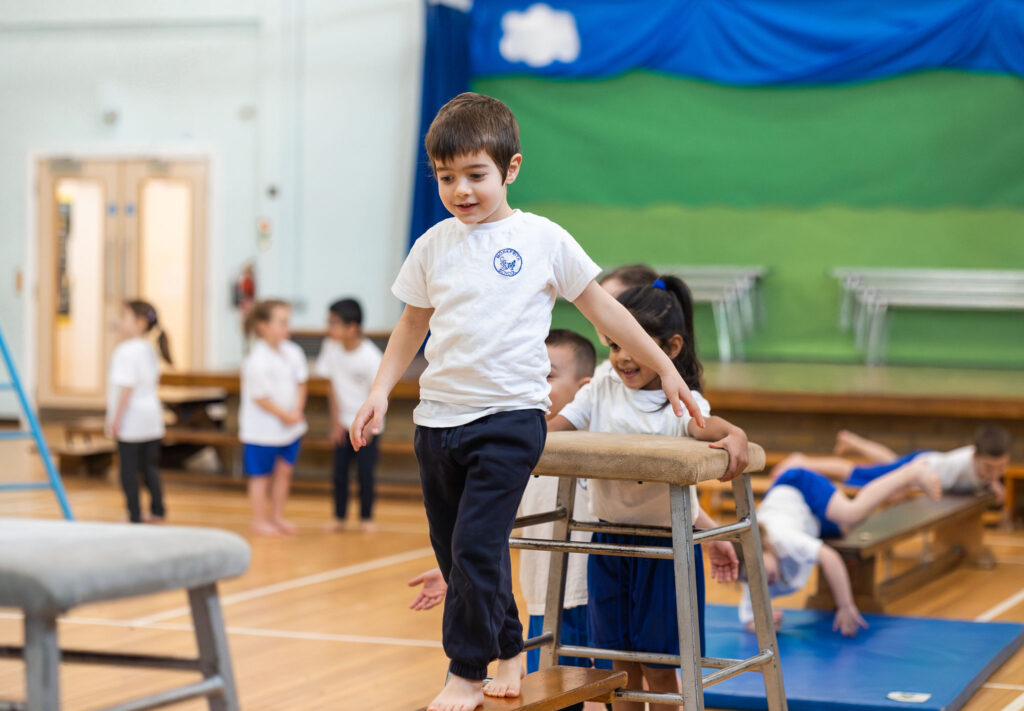
We ensure that all children at Monkfrith engage in a comprehensive programme of Physical Education, designed to promote fitness, health awareness, and the development of essential life skills.
Physical Education plays a crucial role in fostering not only physical health but also social and emotional well-being, and we are committed to providing an inclusive and varied PE curriculum that caters to all children’s needs.
A wide range of sports is available to pupils, encouraging participation, teamwork, and personal achievement. We run both mixed and girls’ football teams, which regularly compete in Borough competitions, demonstrating the high level of engagement and skill development within our school. The sports offered include football, netball, hockey, tennis, rounders, swimming, athletics, as well as high-quality gymnastics and dance.
These opportunities ensure that every child has the chance to develop their physical abilities in a supportive and enjoyable environment, in line with the National Curriculum’s focus on providing a broad and balanced education.
PHSE
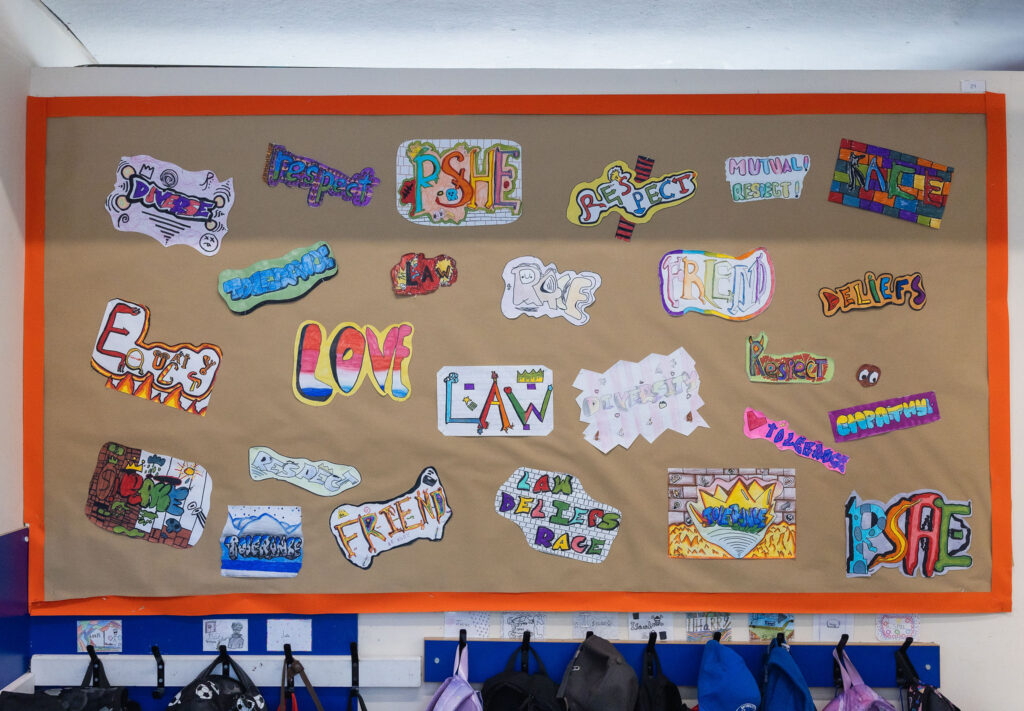
Personal, Social and Health Education is an essential part of our curriculum. We aim to equip children with the knowledge, skills, and confidence they need to stay healthy, safe, and happy, and to become active, responsible members of society.
We follow the Health Education Partnership framework, which ensures our teaching is structured, age-appropriate, and in line with statutory guidance.
In the Relationships Education units, children learn about different types of families, people who care for them, and how to build caring, respectful relationships. They are also taught how to keep themselves safe, both in real life and online.
In the Health Education units, we focus on physical health, including fitness, healthy eating, and the choices children make about substances such as drugs, alcohol, and tobacco. Mental wellbeing is a key part of our curriculum and links closely to our use of the Zones of Regulation approach, helping children to understand and manage their emotions.
We also cover economic wellbeing, citizenship, and careers education, helping children understand their role in society and encouraging them to think about their futures.
In accordance with the National Curriculum, we teach Sex and Relationships Education (SRE). The programme and materials are carefully selected to reflect the sensitivity and needs of all pupils. Parents are invited to view and discuss these materials with teachers before they are introduced to children.
Our PSHE curriculum also supports the promotion of British Values and an understanding of protected characteristics, helping to prepare our children for life in modern Britain.
RE
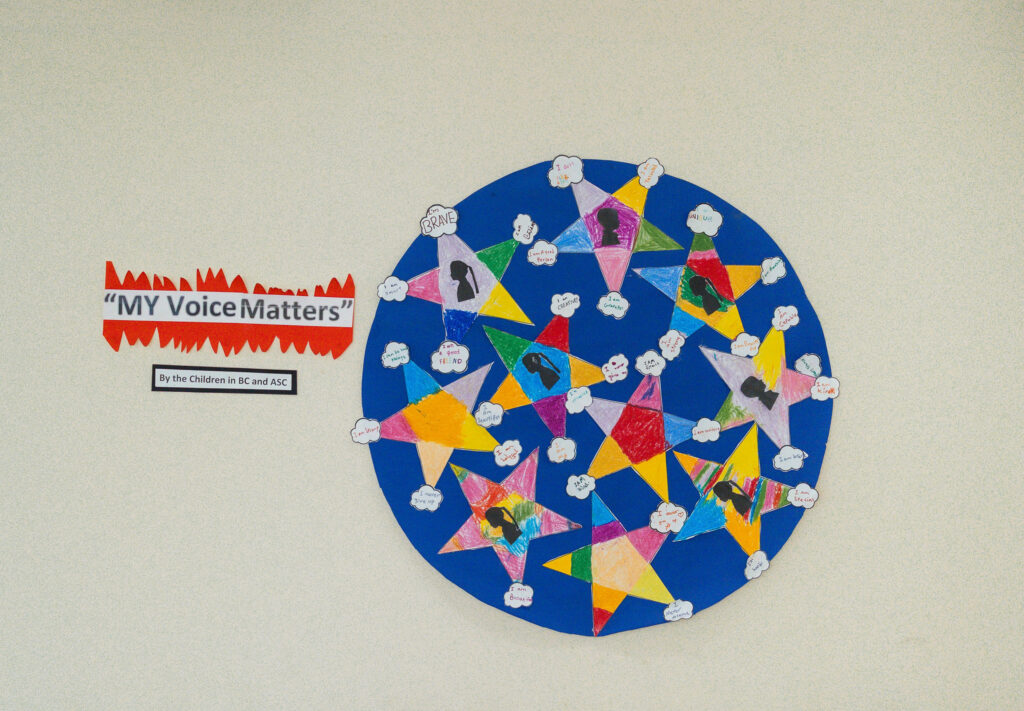
At Monkfrith, our Religious Education curriculum plays an important role in promoting respect, tolerance, and understanding of different beliefs and traditions, helping children to reflect thoughtfully on their own views and experiences.
RE is taught across the school on a regular basis, following the Barnet SACRE (Standing Advisory Council for Religious Education) Scheme of Work.
From September 2025, the curriculum will be structured around Six Big Questions, which act as ‘golden threads’ running through the children’s learning. Each year, pupils will build on their knowledge, skills, and understanding to explore the lived experiences of people in relation to both multi-religious and multi-secular worldviews and ways of life. The Six Big Questions are:
- What is real?
- Where do we come from?
- How do we know?
- What is our situation?
- What is our goal?
- How do we get there?
MFL
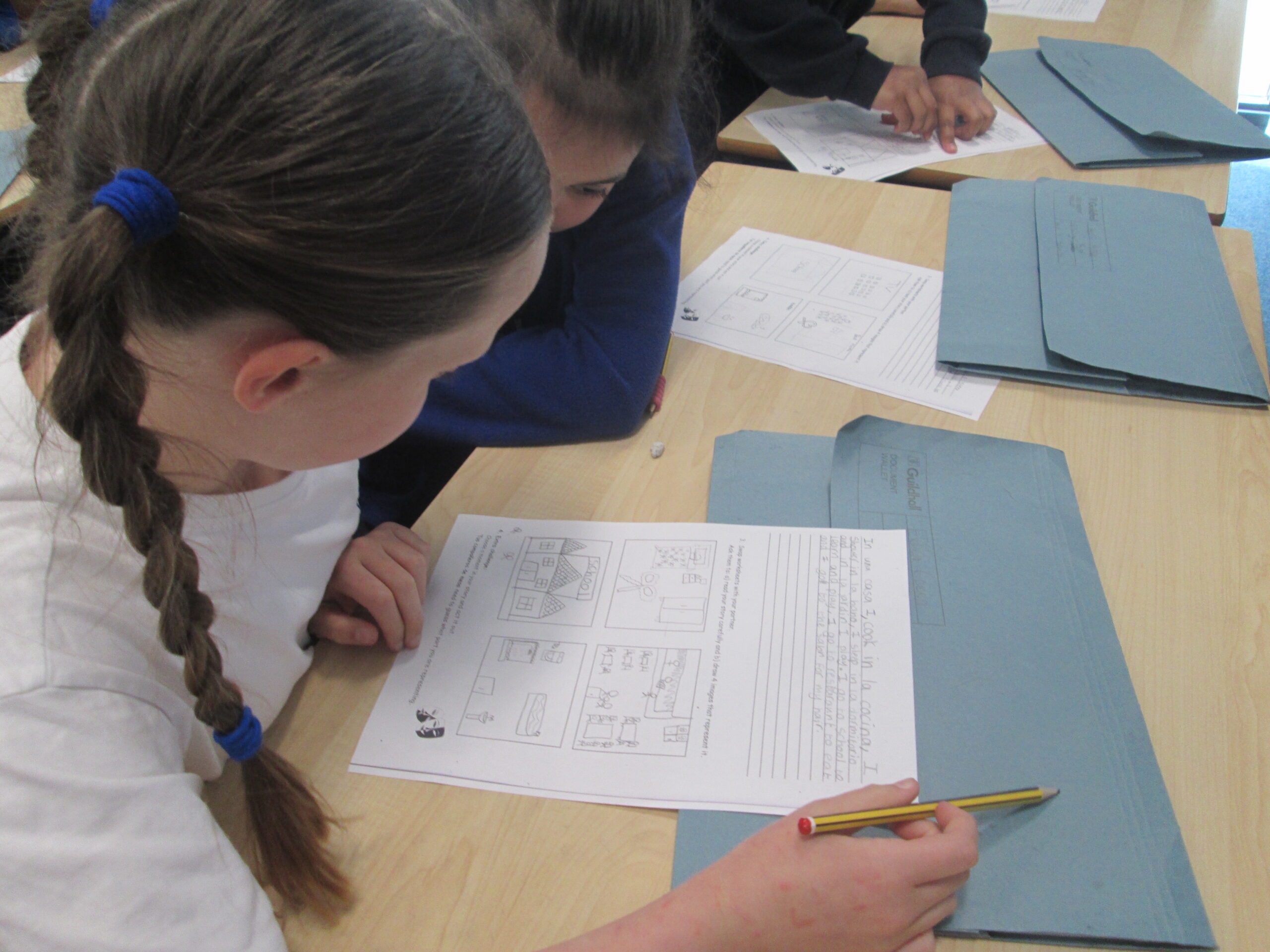
The Modern Foreign Language we teach in KS2 is Spanish.
We want all children to be able to speak and write in Spanish with confidence and fluency. We achieve this by providing lots of speaking and listening opportunities during Spanish lessons and through opportunities to respond to spoken and written language from a variety of authentic sources.
Computing
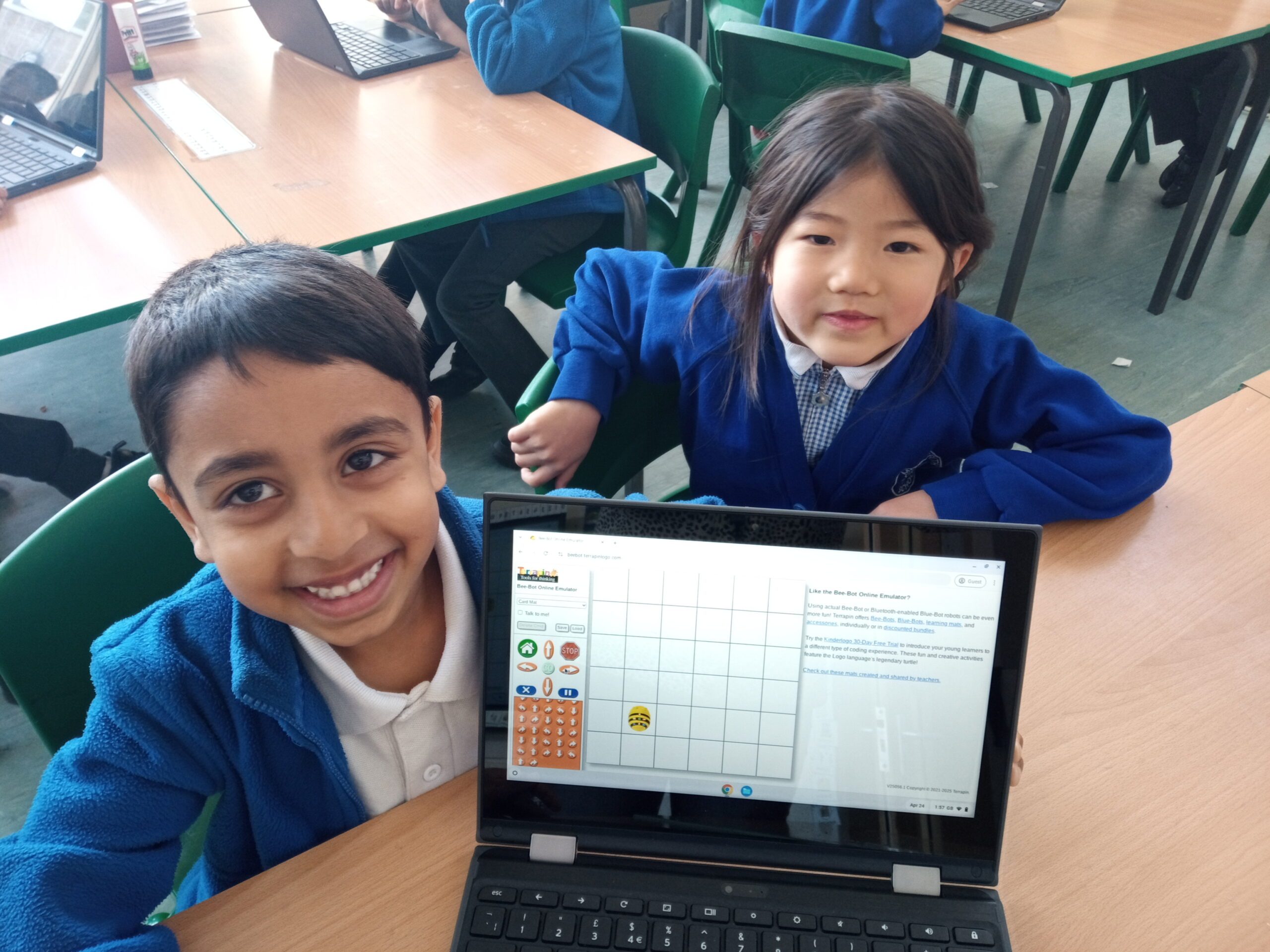
At Monkfrith, our Computing curriculum equips children with the essential skills and knowledge they need to thrive in a rapidly changing digital world. We aim to ensure that all pupils develop a deep understanding of computing, empowering them to use technology confidently, creatively, and safely.
Our curriculum covers a broad range of computing skills, including data processing, word processing, animation, and coding, ensuring that children can engage with technology across multiple contexts. From creating digital content to problem-solving through programming, we focus on developing technical skills as well as the ability to work collaboratively using digital tools.
Throughout the school, we embed online safety into every aspect of our teaching, ensuring children are aware of how to use technology responsibly and understand the importance of safe practice when working online. This includes lessons on cyber security, privacy, and how to navigate the digital world safely.
In addition to technical skills, we aim to foster critical thinking and problem-solving skills through coding and other activities. These enable children to approach challenges creatively and systematically, preparing them for future learning and participation in the digital economy.
By the end of each key stage, our goal is for pupils to be:
- Proficient in using a wide range of digital tools and applications.
- Confident in coding and programming to solve real-world problems.
- Knowledgeable about online safety and able to make responsible decisions online.
- Able to understand the impact of computing on society and the environment.
Art and Design
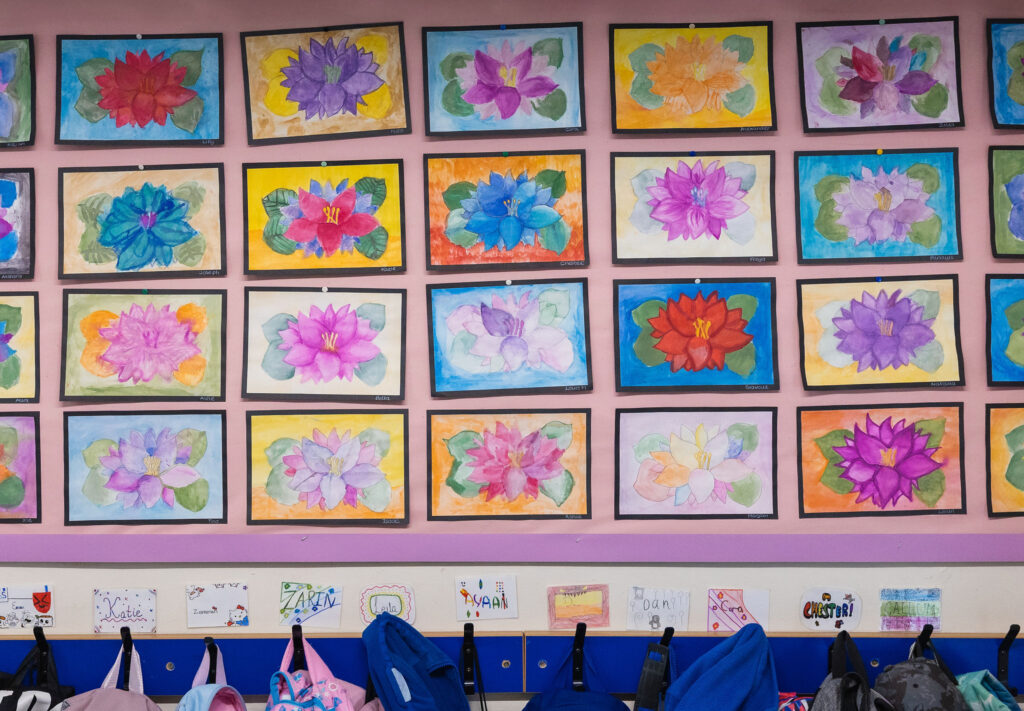
Our Art and Design curriculum inspires creativity, developing children’s skills to experiment and create. It also builds their understanding of art over time and across cultures, encouraging them to think critically about art and design.
Drawing
In Reception, children focus on mark-making using a range of tools, supporting their creativity as well as developing gross and fine motor skills. From Year 1 onwards, they are taught how to use sketching pencils, watercolour pencils, pens, charcoal, and graphite to refine their drawing techniques.
Painting
Throughout their seven years at Monkfrith, children build an understanding of colour theory and learn to apply it creatively. They work with poster paints, watercolours, acrylics, pastels, and oil pastels. They also study a range of artists over time, including Kandinsky, Hokusai, and Ofili, to inspire and inform their own work.
Sculpture
Children explore a variety of sculptural techniques, starting with junk modelling and paper sculpture in EYFS and Key Stage 1, and progressing to working with clay, Modroc, and sculpture wire in Key Stage 2. They study artists such as Andy Goldsworthy, the work of the BellBeaker people and Yayoi Kusama.
Art Criticism and Appreciation
Throughout each unit, children are introduced to significant artists, craftspeople, and artistic movements from different periods and cultures. In line with the National Curriculum, we aim to develop their ability to analyse and evaluate art, build a rich artistic vocabulary, and confidently express their own ideas and opinions about creative works.
Design and Technology
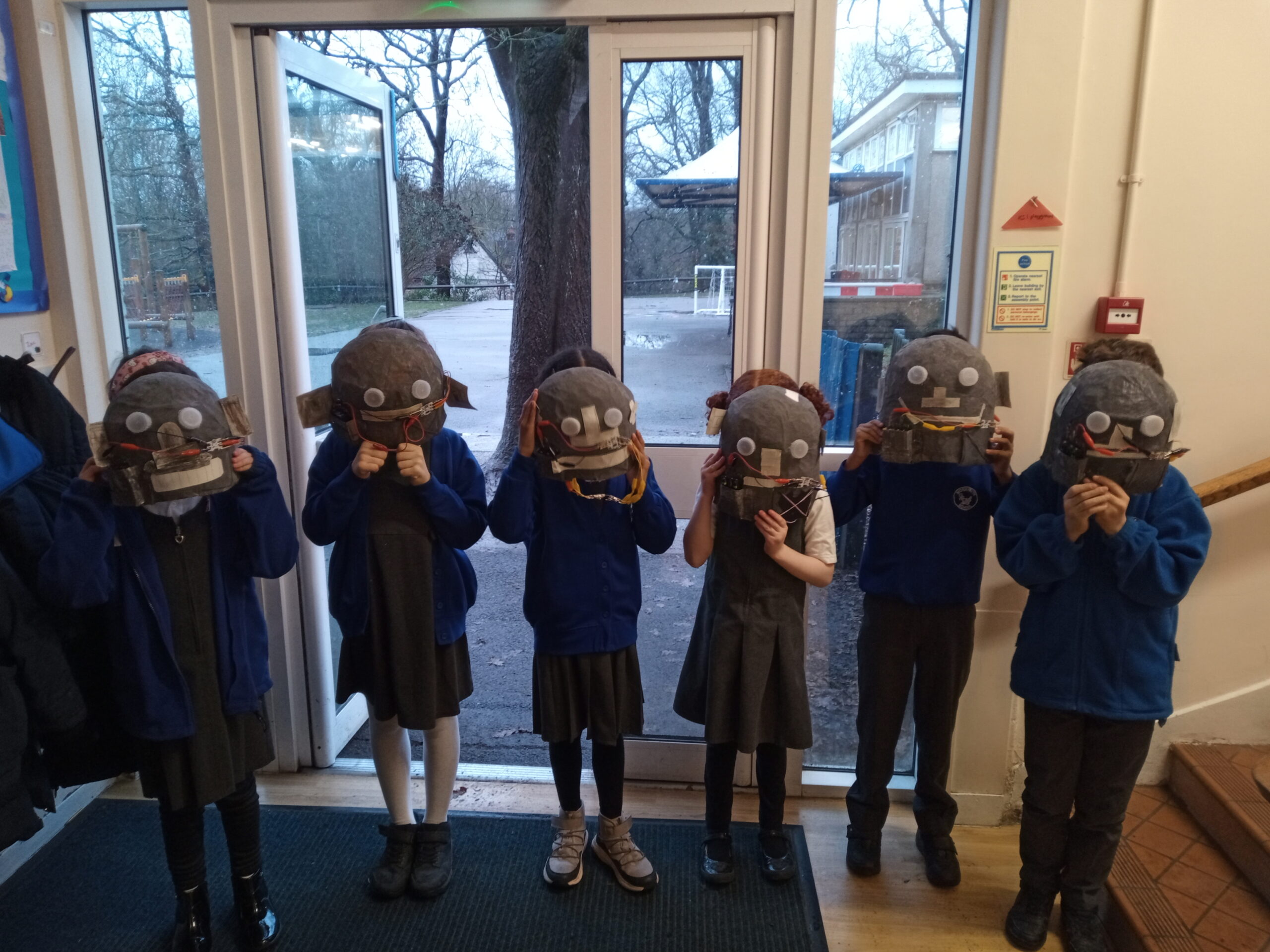
At Monkfrith, our Design and Technology (D&T) curriculum encourages children to think creatively and critically, solving problems both individually and as part of a team. It is an integral part of our approach to fostering practical problem-solving skills and innovative thinking.
Children will use their creativity and imagination to design and make products that solve real-world problems. This work is rooted in practical applications and will involve considering both their own and others’ needs, wants, and values. As part of our curriculum, we ensure that D&T is connected to other subjects, such as mathematics, science, computing, and art, so that children can see the links between different areas of learning and understand how these skills apply in real-life contexts.
Our curriculum encourages children to reflect upon and evaluate both historical and modern examples of design and technology. They explore how designs and technologies have evolved over time, learning about their uses and effectiveness. Additionally, we foster a growth mindset by encouraging children to become innovators and risk-takers, exploring new ideas and experimenting with different techniques and materials.
By the end of each key stage, our aim is for children to have developed the ability to:
- Design products that are functional and meet specific needs.
- Make products using a range of tools and materials safely.
- Evaluate their own work and the work of others, reflecting on design processes and outcomes.
- Understand the wider impact of design and technology on society and the environment.
Extracurricular Activities
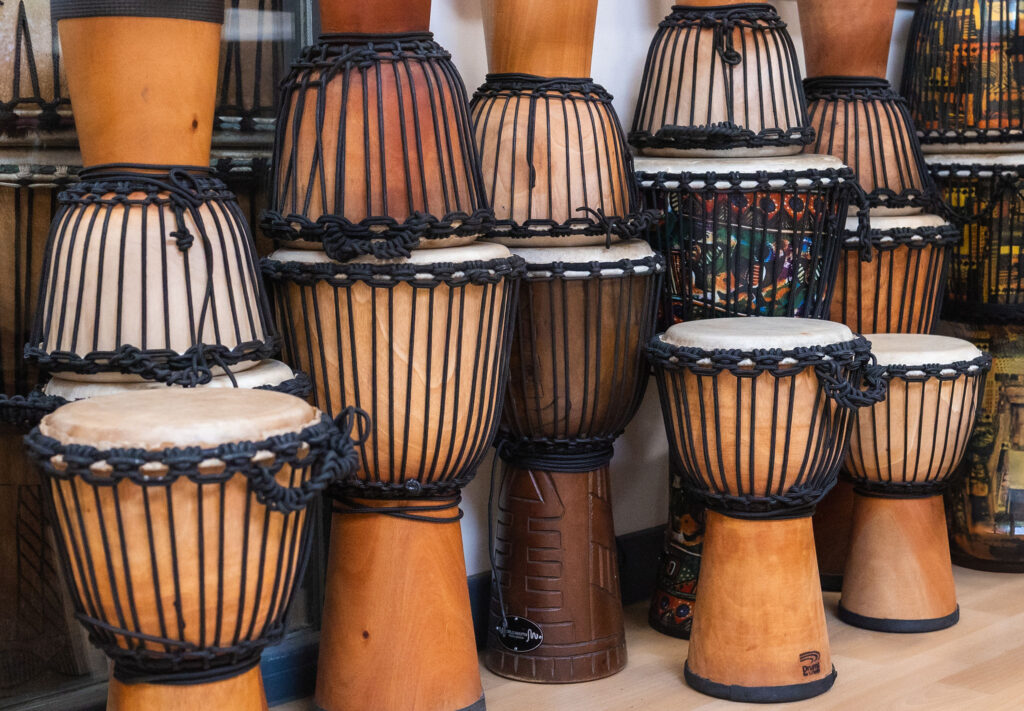
Each term, we offer a diverse range of extracurricular activities to enrich our children’s learning and development. From sports clubs and creative arts to performance opportunities and language enrichment, there is something for everyone to enjoy.
